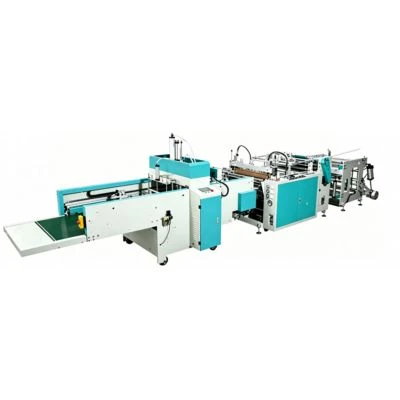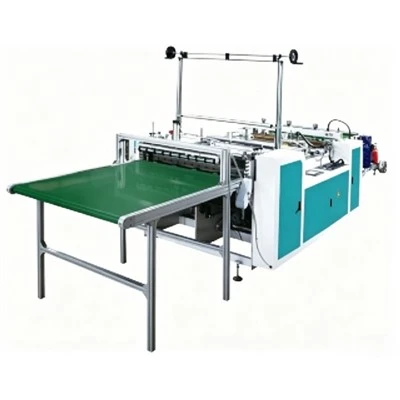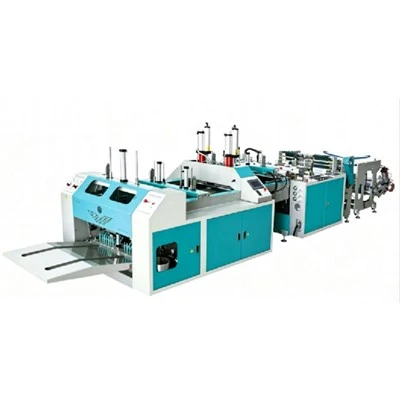

T-shirt bagging machine is mainly used to feed, heat sealing, cut and punch plastic filminto "T-shirt" (waistcoat) bags, widely used in supermarkets, shopping malls, retail stores and general merchandise packaging. When buying such equipment, buyers consider not only the speed and size of the finished bag, but also whether the machine matches the specific membrane material they intend to use.
From the equipment suppliers's point of view, the range of materials a T-shirt bag maker can handle depends on the composition, thickness, mechanical and thermalsealing characteristics of the film. The following are some of materials commonly used in production and the key factors to verify when selecting equipment.
1.High-Density Polyethylene (HDPE) Film
HDPE film is standard for T-shirt bags. With good rigidity and tensile strength, it is ideal for everyday shopping bags, supermarket plastic bags and lightweight retail packaging.
Because the film is usually thin, it is ideal for mass production. In the manufacturing process, the equipment must maintain the consistency of feeding tension, and control sealing temperature and cutting blade positioning precisely. This ensures that the bag does not suffer from poor sealing, edge distortion or uneven handle cutting.
For manufacturers using mainly HDPE film, it is recommended that priority be given to verifying the equipment's compatible film thickness range, feed stability and its ability to continuous, high-speed sealing and cutting.
2.Low-Density Polyethylene (LDPE) Film
LDPE film has superior flexibility and elasticity, suitable for shopping bags that require a certain flexibility, transparency or a sleeker appearance.
Compared with rigid films, LDPE film are more sensitive to tension, temperature and thickness during feeding, sealing and cutting. If the machine parameters are not set correctly, there may be problems such as film stretching, bag mouth deformation or unnecessary adhesion at the seal.
Therefore, when purchasing a T-shirt bag maker, it is important to ensure that the device adjusts feed speed, sealing temperature and cooling time to meet the production requirements of different types of bags based on the specific properties of the LDPE film. Linear Low-Density Polyethylene (LLDPE) Film
LLDPE film have excellent toughness and puncture resistance and are a common choice for plastic packaging that requires improved durability.
In T-shirt bag production, LDPE can be used as a separate material or mixed with other polyethylene resins to fine-tune the film's flexibility and strength. It is important to note that the elongation and thermal sealing properties of the films can be changed by different material formulations.
Equipment suppliers must evaluate specific membranes provided by customers to ensure that they do not overstretch or deform during feeding and verify that heat seals and die-cutting handles meet the requirements of the finished product.

4. Biodegradable Plastic Film
Some T-shirt bag makers can process biodegradable or compostable membranes,such as those made by PLA or PBAT, to meet the needs of projects that require environmentallyfriendly packaging solutions.
These films may have different processing characteristics than standard PE films. In production process, attention must be paid to the temperature of heat seal, the possibility of material adhesion tool, seal strength and the stability of continuous operation. Not all standard models are intrinsically compatible with these materials; therefore, it is important to confirm that the equipment supports the expected materials prior to purchase.
In addition, whether a material is truly biodegradable or compostable depends on its specific formulation, certification standards and expected environmental conditions --not just the name of the raw material.
5. Recycled Polyethylene Film
The use of recycled polyethylene film helps meet customer requirements in terms of raw material costs and incorporation of recycled content. The feasibility of using this film for bagging depends on the quality of the recycled material, the level of impurities, the proportion of the material mixed and the consistency of the film production process.
During the debugging phase of the equipment, it is recommended that the following aspects should be focused on:
Feed stability: ensure that the film runs smoothly without significant misalignment, wrinkles or tension abnormalities.
-Heat-Sealing Quality: Check bag bottom seal is secure to ensure no weak seal or partial cracking.
-Handle Die Cut: Make sure the handle is cut correctly and there are no visible scratches or tears at the edge of the pocket. -Continuous production performance: See if the film of different batches affects sealing/cutting quality or the finished product size.
If there are significant fluctuations in the thickness or formulation of the regenerated film, a test run should be conducted to determine the appropriate production parameters.
6. How should T-shirt bag makers be selected based on the type of film?
Different materials require different equipment. When requesting a quotation, the buyer may provide the following information to assist the supplier in determining the most suitable machine type.
|
Selection Criteria |
Details to Confirm |
|---|---|
|
Film Material |
HDPE, LDPE, LLDPE, recycled PE, or biodegradable film |
|
Film Thickness |
Minimum thickness, maximum thickness, and actual production thickness |
|
Bag Specifications |
Bag width, bag length, handle dimensions, and bag structure |
|
Sealing and Cutting Requirements |
Seal strength, cutting quality, and temperature control requirements |
|
Production Capacity |
Output per minute, daily operating hours, and material changeover frequency |
|
Optional Configurations |
Servo feeding, web guiding system, print registration tracking, or specialized sealing and cutting mechanisms |