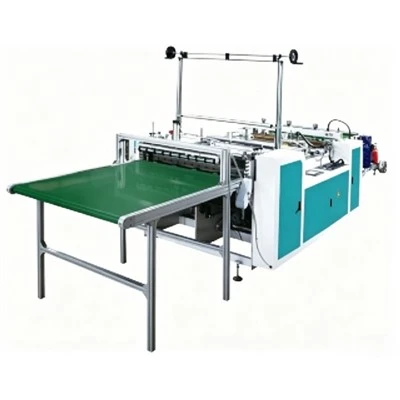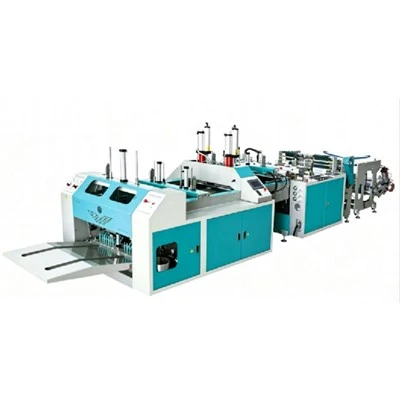


The Automatic Plastic Bag Stacking and Packing Machine handles finished plastic bags after production, arranging them into organized stacks for counting, grouping and subsequent packing according to the selected configuration. It connects bag making with finished-product handling and helps standardize stack quantities and discharge procedures. The equipment configuration can be customized to suit compatible bag formats, production requirements, downstream packaging and factory layout.
Key Advantages
Consistent Stacking: A defined stacking process helps align finished bags into orderly batches. The stacking arrangement is selected according to bag dimensions, construction and the required finished format.
Controlled Batch Quantities: Counting and batch separation can be configured around the required number of bags per stack. The available counting range depends on the selected system.
Coordinated Output: The discharge process can be matched to the next handling stage, supporting a more organized flow from bag production to collection or packing.
Application-Based Configuration: Bag specifications, target output and installation conditions guide the equipment configuration, helping align the system with actual production requirements.
Applications
Shopping Bags: Suitable for evaluating compatible shopping bags with different dimensions and handle designs. Bag construction and the required stacking format determine the appropriate configuration.
T-Shirt Bags: Can be assessed for vest-style bags produced on automatic bag-making lines. Handle openings, film properties and finished dimensions should be confirmed before selection.
Flat Plastic Bags: Suitable for assessing compatible flat bags used in retail packaging and general industrial applications. Handling settings depend on film characteristics and bag dimensions.
Bag Production Lines: Applicable to plastic bag production facilities seeking to organize finished-bag stacking, counting and downstream packing within a coordinated workflow.
Bag Compatibility and Handling
Bag Dimensions: Bag width and length determine the required handling range. Confirm the minimum and maximum dimensions of every bag format intended for production.
Film Material: HDPE and LDPE compatibility should be confirmed against film thickness, surface friction and static behavior. Sample testing can help establish suitable handling settings.
Stack Quantity: Specify the required number of bags per stack or package. The counting method, separation mechanism and discharge arrangement should match the finished-product requirements.
Bag Construction: Handle openings, folded sections, perforations and sealing edges can affect alignment during handling. Include these details in the technical assessment.
Technical Specifications
|
Parameter |
Specification |
|
Machine Type |
Automatic bag stacking and packing system |
|
Applicable Materials |
HDPE, LDPE, and compatible biodegradable films |
|
Minimum Bag Width |
100 mm |
|
Maximum Bag Width |
800 mm |
|
Minimum Bag Length |
150 mm |
|
Maximum Bag Length |
1000 mm |
|
Film Thickness Range |
0.01 – 0.15 mm |
|
Stack Quantity |
10 – 100 bags/stack |
|
Stacking Speed |
Up to 150 bags/min |
|
Packing Speed |
Up to 10 packs/min |
|
Installed Power |
2.5 – 5.5 kW |
|
Power Supply |
380V, 50Hz, 3-Phase |
|
Machine Dimensions |
Approx. 2500 × 1200 × 1400 mm |
|
Machine Weight |
Approx. 800 – 1200 kg |
Production Line Integration
Upstream Connection: Integration with an existing bag-making machine requires confirmation of discharge height, bag orientation, transfer distance and available installation space.
Output Matching: Production speed, operating lanes and required stack quantities should be reviewed together to establish the required handling capacity.
Downstream Handling: The discharge arrangement can be assessed for manual collection, secondary packing or connection to compatible packaging equipment. Interface dimensions and operating sequences should be confirmed during configuration.
Customization Options
Bag Format: The configuration can be assessed for different bag dimensions, film thicknesses, handle designs and material characteristics within the confirmed operating range.
Stacking Settings: Stack quantity, counting requirements and batch discharge arrangements can be specified according to the required finished-bag format.
Equipment Layout: Conveyor dimensions, machine arrangement and connection points can be reviewed against factory drawings and existing equipment positions.
Electrical Requirements: Power supply, control interfaces and operating conditions should be confirmed for the destination facility before the final configuration is agreed.
Operation and Production Changeover
Product Settings: Record bag dimensions, required stack quantities and target operating speed for each production specification. Adjustment methods depend on the selected control system.
Changeover Procedure: When changing bag sizes or styles, operators should follow the equipment setup procedure and verify bag alignment, batch quantity and discharge performance before normal operation.
Routine Maintenance: Inspection should cover conveying components, bag-contact surfaces, sensors where fitted and moving mechanisms. Cleaning and maintenance intervals should follow the equipment documentation.
Ordering Information
Production Requirements: Provide bag type, material, width, length, film thickness, required stack quantity and target production output.
Existing Equipment: Share the bag-making machine specifications, discharge arrangement and available installation space to assess line compatibility.
Packing Requirements: Confirm the intended pack quantity, packing method, finished-package format and downstream handling process.
Custom Configuration: Customization can be assessed against the confirmed application, technical requirements and factory layout. A quotation can be prepared once the equipment scope and required specifications have been established.
Frequently Asked Questions
Q: Which plastic bag types can the machine handle?
A: Compatibility depends on bag dimensions, film properties, handle design and the selected stacking mechanism. Bag samples and technical specifications help establish the suitable configuration.
Q: Can the machine connect to an existing bag-making line?
A: Integration can be assessed using the upstream machine details, discharge height, production output and available installation space.
Q: Can the number of bags per stack be adjusted?
A: The required stack quantity can be specified during configuration. The available adjustment range depends on the selected counting and stacking system.
Q: How is the required production capacity determined?
A: Capacity assessment considers bag output per minute, operating lanes, required stack quantity and the downstream packing cycle.
Q: Is customization available?
A: Yes. Bag handling, stacking arrangements, conveying interfaces and equipment layout can be assessed for customization according to technical feasibility and confirmed production requirements.
Hot Tags: automatic plastic bag stacking and packing machine, China automatic plastic bag stacking and packing machine manufacturers, suppliers, factory, Automatic Plastic Bag Labeling and Packing Machine, Bag Folding Equipment with Automatic Material Feeding, Cold Cut Thin Plastic Bag Making Machine, Four Lane PE Film Bag Converting Line, High Output Plastic Shopping Bag Production Machine, Side Weld Plastic Packaging Bag Converting System