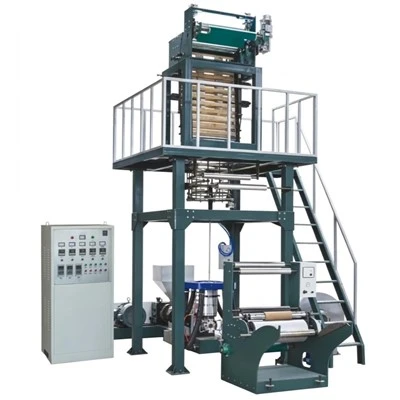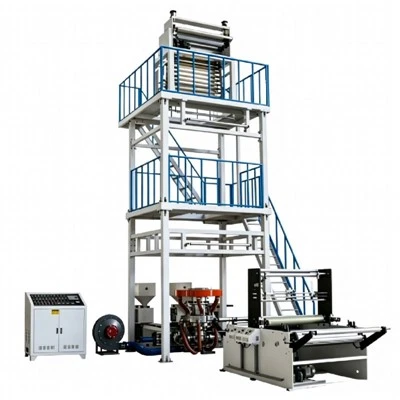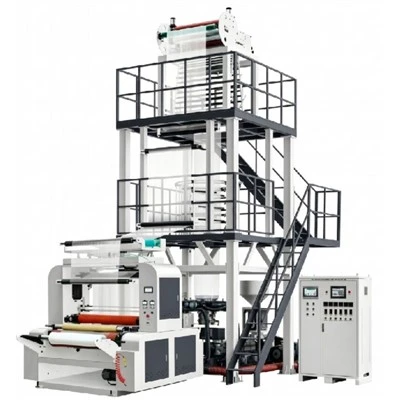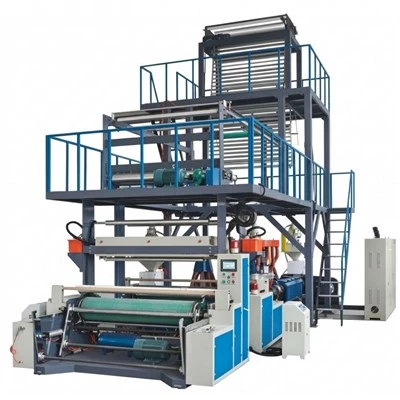

Vest bag making machines are core equipment in daily-use plastic packaging production lines, and their selection directly affects a company's production capacity, product quality, and operating costs. In the 2026 market environment, the following five core indicators will help you quickly determine the quality of the equipment.
Production Capacity and Bag Making Speed
Production capacity is the primary consideration in equipment selection. After clarifying the company's daily or monthly output targets, match the equipment capacity accordingly: mainstream vest bag making machines typically have a bag-making speed between 30-140 bags/minute [citation:8], with some models reaching 160 bags/minute [citation:4]. Equipment with dual-channel or four-channel designs can significantly increase single-machine capacity; for example, a four-channel fully automatic machine can achieve a production speed of 40-120 bags/minute × 4 [citation:5]. When selecting, note that nominal speed does not equal effective capacity-focus should be placed on the equipment's stability and yield rate during continuous operation [citation:2][citation:4].
Material Adaptability
Vest bag making machines need to be compatible with various film materials. Mainstream equipment should support HDPE (high-density polyethylene), LDPE (low-density polyethylene), and biodegradable materials (such as PLA), etc. [citation:1][citation:5]. Different materials have different requirements for heating temperature and sealing pressure. High-density polyethylene requires higher temperature control accuracy. When selecting a machine, it is essential to confirm that the equipment parameters match the process requirements of the main production material.
Precision and Finished Product Quality
The dimensional consistency of the finished product directly affects customer satisfaction. The length error of high-precision equipment should be controlled within ±1mm [citation:8], and the sealing and cutting dimension tolerance should be stable at ±0.02mm. This relies on a high-precision servo drive system and photoelectric tracking system-the photoelectric sensor tracking ensures accurate printing pattern positioning, and automatically stops and warns when the photoelectric sensor fails [citation:4].
Automation Level
Automation configuration directly affects labor costs and the reliability of mass production. Modern vest bag making machines should be equipped with a PLC control system + touch screen interface, supporting parameter storage and one-click retrieval [citation:1]. Automatic counting, automatic punching, and automatic stacking are standard configurations that reduce manual intervention [citation:1][citation:8]. Models with automatic punching can complete U-shaped opening forming in one step, reducing subsequent processes [citation:6].
Energy Efficiency and Overall Cost
In long-term operation, energy consumption and maintenance costs cannot be ignored. Attention should be paid to whether the equipment uses a variable frequency speed control motor to reduce power consumption [citation:1], and whether it is driven by a servo motor [citation:4]. At the same time, the warranty period (usually 1 year), the supply cycle of core spare parts, and whether the manufacturer provides technical training and regular maintenance services should be clearly defined [citation:1][citation:8].
Selection Summary: When purchasing a vest bag making machine in 2026, the matching degree between bag making speed and daily output, material compatibility range, sealing and cutting accuracy control level, completeness of automation configuration, and overall operating costs should be confirmed in the following order: [citation:1][citation:8]. It is recommended to test the machine with your own materials at the manufacturer before purchasing and request case studies from customers in the same industry for reference.