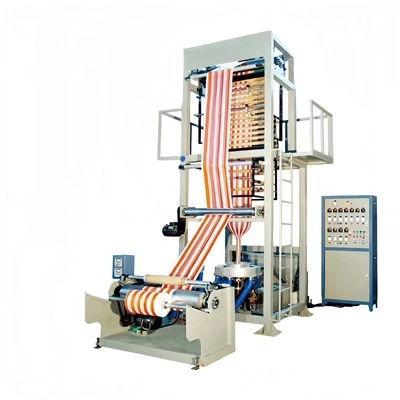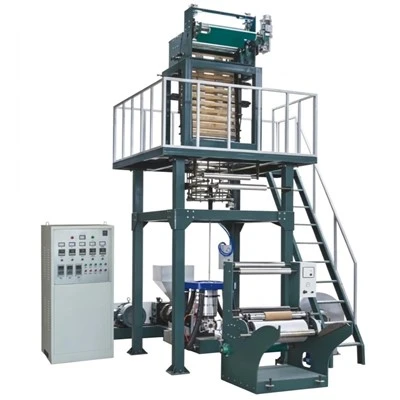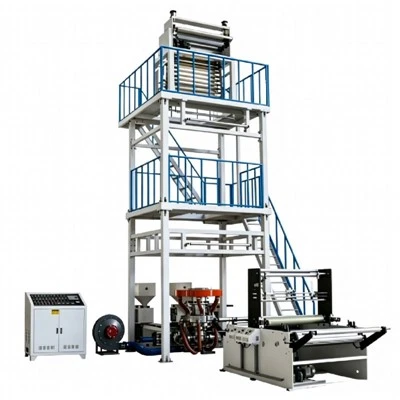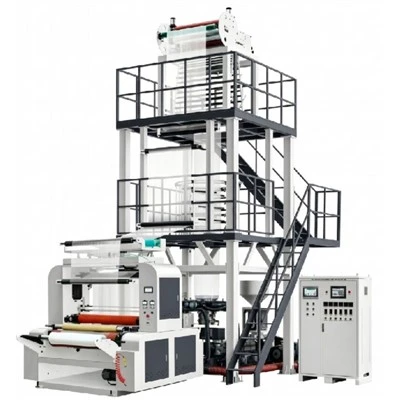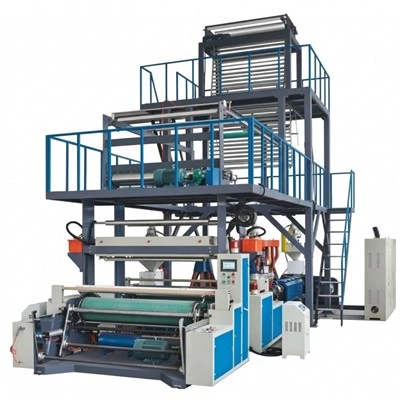


The Twin-Head Narrow-Width Film Production Machine produces two narrow plastic film outputs through a twin-die-head blown-film system. It serves film processors supplying shopping bags, garbage bags and other flexible packaging products. The extrusion system, die heads, cooling section, haul-off and winding units are selected according to resin type, film dimensions and production targets. Customized configurations can be assessed against the required film specifications, downstream converting equipment and available installation space.
Key Advantages
Dual Film Production: Two die heads provide two film outputs within one integrated line. This arrangement suits production plans focused on narrow rolls and defined film specifications.
Coordinated Processing: Extrusion, cooling, haul-off and winding operate as connected stages. Matching their capacities helps maintain a suitable production setup for the specified film range.
Material-Based Configuration: Screw design, die dimensions and processing conditions can be selected according to the intended resin and film thickness. These factors also influence achievable output.
Application-Specific Winding: Winding specifications can be assessed against roll width, finished-roll diameter and the requirements of downstream bag-making equipment.
Applications
Shopping Bag Film: Suitable configurations can produce polyethylene film for shopping bag conversion. Film width, thickness and resin properties should match the bag design and sealing process.
Garbage Bag Film: The line can be evaluated for garbage bag film according to the required material grade, film dimensions, roll specifications and output target.
Flexible Packaging Film: Other narrow-film applications can be assessed by confirming the resin formulation, finished-film requirements and compatibility with the intended converting process.
Material Compatibility
HDPE: HDPE is commonly used for film requiring defined stiffness and handling properties. Resin grade and target thickness determine the appropriate processing conditions.
LDPE and LLDPE: LDPE and LLDPE are used in flexible packaging where flexibility, toughness and sealing performance are important. The extrusion and die configuration must suit the selected resin.
Recycled Resin and Additives: Recycled resin, color masterbatch and fillers require consideration of melt behavior, feeding consistency and material composition. Confirm the formulation before finalizing the machine specification.
Technical Specifications
|
Parameter |
Specification (Typical Range / Customizable) |
|
Number of die heads |
2 |
|
Number of film outputs |
2 |
|
Film width per head |
200–600 mm (Customizable) |
|
Film thickness range |
0.01–0.10 mm |
|
Screw L/D ratio |
28:1–30:1 |
|
Maximum output |
40–120 kg/h |
|
Main motor power |
15–30 kW |
|
Total installed power |
25–50 kW |
|
Maximum winding roll diameter |
600–800 mm |
|
Overall machine dimensions |
Approx. 4500 × 2200 × 3800 mm |
|
Power supply |
380V, 50Hz, 3-Phase (Customizable upon request) |
Main Machine Configuration
Extrusion Unit: The screw, barrel, drive and temperature controls determine how the resin is melted and conveyed. Screw diameter and design should match the material grade and required output range.
Die Heads and Cooling: Die dimensions establish the available film-width range. Cooling conditions influence film formation and process stability, so both should be evaluated against the intended resin and thickness.
Haul-Off and Winding: The haul-off controls film movement through the forming section. Winding units collect the finished film into rolls, with roller dimensions, tension control and winding capacity matched to the required roll specifications.
Customization Options
Film Dimensions: Provide the target width and thickness for each output. These values guide die selection, cooling configuration and winding specifications.
Auxiliary Equipment: Automatic loading, dosing systems, corona treatment and automatic winding can be assessed where compatible with the selected line. The final specification should distinguish included equipment from optional items.
Factory Requirements: Confirm available installation space, electrical supply and cooling conditions. These details help determine the machine layout and auxiliary equipment requirements.
Machine Selection Guide
Define Film Requirements: Specify the resin grade, film width, thickness range and finished-roll dimensions. List each output separately if the two products require different specifications.
Establish Output Targets: State the required production rate in kilograms per hour and clarify whether it refers to each output or the combined line. Confirm the target against the intended material and film thickness.
Check Converting Compatibility: Review finished-roll dimensions, film properties and winding requirements against the bag-making or packaging line. This helps align film production with the next processing stage.
Quality Control and Export Preparation
Technical Documentation: Confirm the machine configuration, principal components, electrical requirements and agreed operating parameters in the technical specification before production.
Inspection and Trial Running: Agree on inspection criteria and trial-running conditions before order confirmation. Where applicable, evaluate the specified resin and film dimensions against the agreed operating requirements.
Export Documentation: Confirm the equipment list, operating manual, electrical information, packing details and required shipping documents. Record delivery terms and shipment arrangements in the order documentation.
Frequently Asked Questions
Q: What materials can the machine process?
A: HDPE, LDPE and LLDPE are common blown-film materials. Compatibility depends on the extrusion and die configuration, so confirm the intended resin grade before selection.
Q: Can the two outputs have different film widths?
A: This depends on the die arrangement and available configuration. Provide the required width for each output for technical assessment.
Q: How is production capacity determined?
A: Output depends on screw design, resin properties, film thickness, die dimensions and operating conditions. Confirm capacity for the intended material and film specification.
Q: Can the machine be customized?
A: The configuration can be assessed according to film dimensions, resin type, output target, winding requirements and factory conditions. Available options depend on technical feasibility.
Q: What information is needed for a quotation?
A: Provide the resin grade, film width per head, thickness range, target output, winding requirements, power supply and installation conditions. Film samples or product drawings can clarify the technical requirements.
Hot Tags: twin-head narrow-width film production machine, China twin-head narrow-width film production machine manufacturers, suppliers, factory, 1300 mm High Speed Polyethylene Film Blowing Machine, Agricultural Film Blowing Machine, Compact Film Line for Packaging Material Research, Dual Die Film Line with Separate Take Up Units, Film Blowing Machine with Automatic Web Guiding, Laboratory Film Line for Polymer Research